


Marriott Vacation Club organizes its calendar into distinct travel seasons, which play an important role in determining the value and availability of vacation weeks. These seasons are based on demand and vary by resort location, making them an essential consideration for anyone interested in Marriott Vacation Club weeks.
In this guide, we’ll break down the concept of Marriott seasons, explain how they are determined, and discuss their importance for planning your vacations.
What Are Marriott Vacation Club Seasons?
Marriott Vacation Club divides the calendar year into travel seasons to reflect demand and pricing. These seasons are named differently depending on the resort and may include:
- Platinum Holiday, Platinum Plus, Platinum, Gold Holiday, Gold, Silver, Bronze, Bonus Time
- Special, Summer, Sport, Value, Preferred
- Red, Pink, White, Blue
Some resorts, such as those in Hawaii, experience consistent demand year-round and may only have a single season, like Platinum. Other resorts, such as ski destinations, may have multiple seasons to reflect varying demand throughout the year.
How Marriott Travel Seasons Affect Resale Pricing
The season assigned to a specific week impacts its sales price. For example:
- High-demand weeks (e.g., holidays or peak weather seasons) are typically priced higher.
- Off-season weeks (e.g., less popular times of the year) are more affordable.
This pricing structure allows buyers to choose a season that aligns with their travel preferences and budget.
Factors That Determine Marriott Weeks Seasons
Several factors influence how Marriott assigns seasons to specific weeks, including:
- Time of Year: Seasons often align with holidays, school breaks, or peak weather conditions.
- Resort Location: Destinations like Florida are more popular in winter, while ski resorts peak during the snow season.
- Resort Features: Amenities such as golf courses or proximity to events can also affect demand.
For example, Florida’s sunny winter weather makes it a high-demand destination during that time, while ski resorts see increased interest during the colder winter months.
Marriott Seasons vs. Interval International Travel Demand Index
It’s important to note that Marriott’s travel seasons can slightly differ from the Travel Demand Index (TDI) used by Interval International, the exchange network for Marriott Vacation Club. Interval International categorizes weeks into three tiers:
- TDI of 101+: Higher demand
- TDI near 100: Moderate demand
- TDI below 100: Lower demand
These tiers are used for trading purposes and may not align directly with Marriott’s internal seasons. If you’re purchasing a Marriott week, and wish to use it for exchanges, it’s always a wise choice to cross reference the travel demand index.
This can be done by find the week numbers that are part of your deeded season, then looking on IntervalWorld.com to find the Travel Demand Index chart for your resort’s geographical location. You can then see which week numbers within your season have the highest travel demand. It is possible to find relatively high travel demand weeks within a less valuable season.
Grande Vista Case Study
For example, if you purchased a Gold week at Marriott’s Grande Vista, a popular choice for owners who love to exchange, here are the week numbers and dates for the current calendar year:
- Platinum: Week 1 (01/01/2026 – 01/08/2026) through Week 17 (04/27/2026 – 05/04/2026)
- Gold: Week 18 (04/30/2026 – 05/07/2026) through Week 21 (05/25/2026 – 06/01/2026)
- Platinum: Week 22 (05/28/2026 – 06/04/2026) through Week 34 (08/24/2026 – 08/31/2026)
- Gold: Week 35 (08/27/2026 – 09/03/2026) through Week 50 (12/14/2026 – 12/21/2026)
- Platinum: Week 51 (12/17/2026 – 12/24/2026) through Week 52 (12/28/2026 – 01/04/2027)
And here is the TDI chart for the Orlando area.
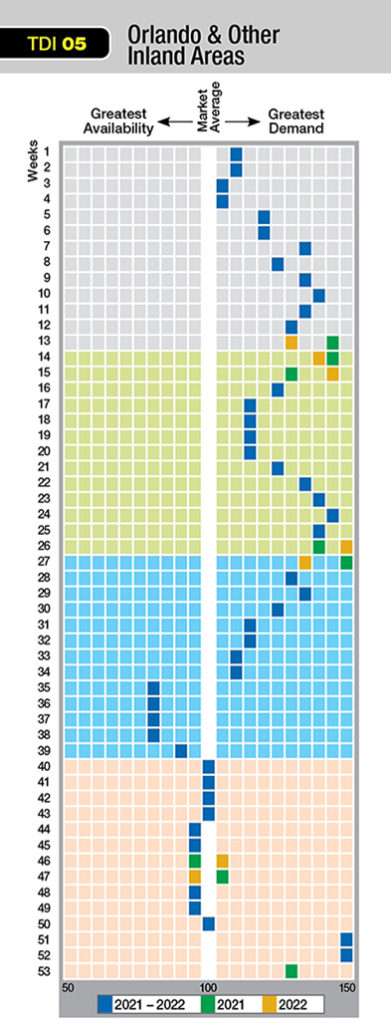
We can see that week 21 is part of the Gold Season at Grande Vista, but carries a TDI of 125, which is relatively high. Also, you can see week weeks 33 and 34 are within the Platinum season and has a TDI of 110.
In this example, you can see that the specific week that is being deposited can be a big factor in getting the best trades, so be sure to cross-reference between TDI charts and weeks calendars if you plan on trading your week consistently.
If you’d like to learn how Interval International’s Travel Demand Index works and learn to optimize your timeshare exchanges for better vacation planning check out our guide here: Interval International Exchange Travel Demand Index: How it Works.
If you’d like to learn how to buy the perfect Marriott week for trading purposes, what fees are required to exchange, and how to double your vacation time, check out our in-depth article here: Buying A Marriott Legacy Week To Trade With Interval International.
Why Understanding Marriott Travel Seasons Matters
For Buyers
Knowing the season of a week is essential when purchasing a Marriott Vacation Club contract. Seasons are listed on resale listings, helping buyers select a timeframe that matches their travel preferences.
For Planners
Understanding Marriott weeks seasons can help you maximize your vacation experience. For example:
- High-demand seasons: Book early to secure your preferred dates.
- Off-seasons: Enjoy lower crowds and potentially better availability.
If you’re unsure which season is best for your needs, consulting a resale agent can provide valuable insights.
Conclusion
Marriott travel seasons are a key component of the Vacation Club experience, influencing pricing, availability, and planning. By understanding how Marriott weeks seasons work, you can make informed decisions when purchasing or booking your vacation.
Whether you’re looking for a high-demand holiday week or a quieter off-season getaway, knowing the nuances of Marriott seasons will help you get the most out of your ownership.
Contact Us Today
Whether you are looking into buying a timeshare on the secondary market, or selling your ownership, feel free to fill in a contact form today. Our team of licensed agents have years of experience specializing in all the name-brand timeshare developers, and will offer a free consultation to answer any questions you may have about the process.